War, Oil & the Industrial Renaissance
The Strait of Hormuz: The World's Most Expensive Bottleneck
Written by Santosh Sankar, 2026-03-12

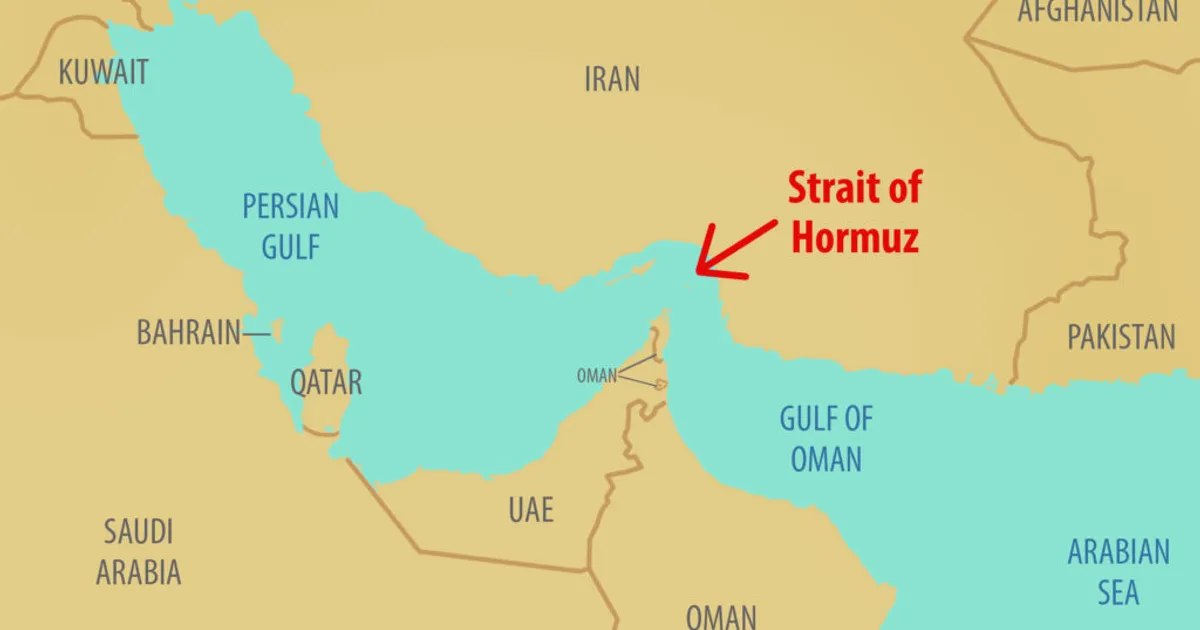
On February 28th, the United States and Israel launched coordinated strikes on Iran targeting nuclear operations, military infrastructure, and leadership. Iran responded by effectively closing the Strait of Hormuz- a 21-mile passage separating Iran and Oman that handles roughly one-fifth of the world's daily petroleum consumption. Since the conflict began, WTI crude has surged 31% to $87, and the ripple effects are already moving through every corner of the global economy.
%20Medium-300x202.webp)
Source: Reuters
The duration question remains open. The US has signaled a desire to exit within six weeks; Iranian leadership has signaled the opposite, with geopolitical analysts at Verisk preparing scenarios for a prolonged campaign. What follows is our read on what this shock means for the petroleum value chain, for the capital markets that fund the industrial economy, and for Dynamo's portfolio and investment thesis.
Crude Is King
Oil is not just fuel. It is the feedstock for plastics, fertilizers, cement, synthetic materials, and industrial chemicals — including helium used in AI chip production — which means a shock to crude is effectively a shock to nearly everything manufactured, shipped, or grown. The two major crude oil benchmarks, Brent and WTI, are up 26% and 31% to $91 and $87, respectively, since the conflict began, with forecasts suggesting prices could push well past $100 per barrel if shipping disruptions persist. US diesel prices are already up 28%, a cost that flows directly and immediately into trucking rates, logistics operations, and any business that depends on moving physical goods. United Airlines has already flagged jet fuel as a material cost concern heading into peak travel season in the US. We’d add that the US Strategic Petroleum Reserve is at ~60% of its total 714M-barrel capacity after the 2022-2023 drawdowns. Currently, this represents 90 days' worth of capacity and is a lever the US government has to dampen inflation concerns. We’d note the International Energy Agency (IEA) has also agreed to release 400M barrels to help manage energy availability and pricing, but prices have remained elevated even post-announcement.
Crude Oil Prices

Source: ICE, Nymex via Bloomberg.
The second-order effects compound quickly from there. Higher oil prices inflate naphtha costs, a key input for petrochemicals and plastics, which flow into packaging and consumer goods pricing across the board. Fertilizer costs spike in tandem — natural gas, which drives 70-90% of nitrogen fertilizer production costs, faces the same supply pressure. Higher fertilizer costs translate to higher food prices, and the inflationary impulse works its way through the entire consumer economy. The IMF estimates that a sustained 10% rise in energy prices adds roughly 40 basis points to global inflation while trimming global growth by up to 0.2 percentage points. For energy-intensive industries - manufacturing, heavy industry, mining, and the data centers powering the AI buildout - the margin pressure is immediate, and the choices are limited: absorb the costs or pass them downstream. Neither option is clean, and that tension is what makes this a genuine stagflationary risk rather than a transient commodity spike should energy prices stay elevated.
Natural Gas, Data Centers, and the AI Supply Chain
Natural gas supplies approximately 40% of US electricity generation today, and that share is expected to remain stable through 2026 and 2027, even as total electricity demand climbs significantly. The primary driver of that incremental demand is data centers. US data centers currently consume around 4.5% of national electricity, but projections from EPRI and the DOE put that figure at 9-17% by 2030, with AI workloads accounting for most of the growth. Natural gas is positioned to carry the majority of that incremental load, and Goldman Sachs estimates that data center expansion alone could add approximately 3.3 Bcf/d of gas demand by 2030. We’d note that some scenarios project as much as 10 Bcf/d of additional demand, equivalent to a 10-15% increase over current US production levels.
The Hormuz closure has already exposed how fragile this picture can become. European benchmark gas prices rose an estimated 35-76% in a single week following the conflict's onset, and QatarEnergy declared force majeure on some LNG shipments, putting a near-term 19% reduction in global LNG supply. Unlike Europe and Asia, the US benefits from domestic natural gas extraction and processing capabilities, but is still sensitive to pricing set at a global scale.
The AI buildout is now layered on top of a gas market with direct geopolitical exposure, and the friction is real. We don't believe rising energy costs will halt the expansion of compute infrastructure — the economic pull is too strong — but they will accelerate the pressure on new data center projects to deploy behind-the-meter generation from hydro, solar, and hydrogen rather than relying on a grid increasingly stressed by the same demand they're creating. That's less a constraint on AI than a forcing function toward distributed energy infrastructure, and that distinction matters for where the next investment cycle concentrates.
Gulf Capital: More Durable Than the Headlines Suggest
The Gulf's sovereign wealth funds: ADIA, Saudi PIF, QIA, KIA, and Mubadala — control approximately $5T in assets, representing roughly 40% of global SWF capital. In 2025, this group deployed an estimated $119B, accounting for two-thirds of all global SWF investment activity and more than 66% of state-owned investment into the US. Their presence in the venture ecosystem is real, but it is bounded in ways that matter for how we think about near-term risk.
Assuming up to 20% of Gulf SWF deployment went into venture, that represents approximately $24B globally, with their combined direct, co-investment, and fund exposure to US venture estimated at $6-$12B or 3-6% of total US VC dollars deployed. The picture in the IPO market is similar: assuming 5-10% of their capital went into public offerings, that's $6-$12B, or about 4-8% of 2025 IPO proceeds. Meaningful, but not a swing factor.
The more counterintuitive read is that a short-term conflict likely generates surplus cash. Higher oil prices flow into larger sovereign surpluses, which compound into larger SWF coffers over time, and short-term conflict is unlikely to prompt a meaningful shift in asset allocation away from venture or private markets. There is a valid argument that this only holds if the Gulf states can ship oil. We’d note that roughly 25% of daily volume is still transiting the Strait of Hormuz, so cash flow, while reduced, is still meaningful. These players equally have financial trading operations that would benefit from rising prices, even if energy operations are complicated. The SWFs are built for a rainy day, so while they are estimated to have low single-digits in cash, they can quickly sell liquid securities. Also, not all the Gulf countries are equal- Saudi will be less impacted than its peers, Qatar, Kuwait, Iraq, and the UAE. If the conflict is seen to be longer-term, the calculus shifts: SWFs could rotate toward publicly marketable securities and away from the longer-duration, illiquid positions that define venture. That's the scenario worth monitoring, not the near-term noise.
Related to IPOs, the concern we've heard more consistently from crossover investors isn't about the SWFs at all; it's about retail absorption capacity for the marquee IPOs that have been anticipated for 2026, including SpaceX, OpenAI, and Anthropic. In aggregate, these could present a $50B supply gap that Wall Street is actively working to solve. While the SWFs are reliable participants in a public float, they are smaller players relative to other “cornerstone” investors, and so any modest shifts due to short-term liquidity needs would add friction but not derail IPO efforts.
What This Means for Dynamo
The portfolio companies with the most direct near-term exposure are those touching logistics costs, energy inputs, or materials sourcing. The 28% run up in diesel prices at the time of writing this piece is not a rounding error and will be passed on to shippers, who will pass on a portion to customers through higher prices. Materials sourcing is a more layered exposure than fuel costs alone. Crude price increases flow directly into the cost of plastics, synthetic materials, and industrial chemicals. These are inputs that show up across manufacturing, packaging, and hardware production. For portfolio companies with physical goods in their supply chains, sustained increases in commodity prices and prolonged supply friction will require material operational changes.
At a high level, the Industrial Renaissance does not break under this scenario but gets more urgent. The case for supply chain resilience, domestic production capacity, and energy-adjacent infrastructure is strengthened, not weakened, by a world in which global energy flows prove less reliable than assumed. The companies building this infrastructure are not less valuable because oil spiked; in many cases, the disruption makes the problem they're solving more visible and the urgency to solve it more acute. We also see the energy constraint creating specific investable opportunities at the intersection of behind-the-meter generation, energy-efficient compute infrastructure, and domestic supply chain alternatives.
More broadly, we are not pausing deployment. We are being deliberate about where energy cost exposure sits in our underwriting, and we are ensuring our portfolio companies have the operational clarity to navigate near-term volatility without losing sight of the longer arc. Dynamo was built for markets like this one — the kind where capital is abundant, and understanding is scarce, and where the investors who have lived inside these industries are better positioned than those arriving now to assess what the shock actually means.