Physical AI - The Next Frontier
Unlocking new opportunities while renewing interest in existing areas of the industrial economy that can be solved at scale
Written by Jon Bradford and Santosh Sankar, 2025-07-17
Summary
- Physical AI has historically underperformed expectations because intelligence lived in software while machines remained brittle, over-programmed, and economically inaccessible.
- Generative AI breaks that constraint by collapsing training time, tolerating imperfect data, and enabling embodied systems to adapt in production rather than be exhaustively specified upfront.
- As intelligence outpaces hardware rigidity, automation expands from narrow, deterministic tasks to flexible, economically viable use cases—resetting the venture opportunity in robotics, logistics, and manufacturing.

Physical AI represents the fusion of artificial intelligence with physical systems—sensors, robots, drones, autonomous vehicles, and industrial machinery that can directly interact with and manipulate their environment. Unlike traditional software-based AI that operates in digital realms, Physical AI is fundamentally "embodied." It possesses both a thinking "brain" (sophisticated algorithms running on GPUs or CPUs) and a functional physical "body" (robotic and mechatronic systems), creating a bridge between bits/bytes and atoms.
This breakthrough is enabled by Generative AI allowing for a faster time-to-value because the model can learn more quickly and use imperfect datasets. Roboticists have long used the concept of “learning by doing”, also called reinforcement learning, to bring a robot to production standards. However, this required thousands of hours of high fidelity production data , which inevitably slowed commercial efforts. Now, leveraging GenAI models in tandem with reinforcement learning techniques, a robot can be brought to production standards in half the time.
The investment opportunities are compelling: where traditional industrial robots require several quarters of programming and struggle to tolerate even small changes in their operating environment, Physical AI systems can become performant with relatively less training data while still increasing tolerance for changes and heightened adaptability when the business case requires needed operational changes.
Physical AI Before Gen-AI
Before the widespread adoption of Generative AI, Physical AI encompassed a robust but constrained ecosystem of industrial automation technologies. The landscape was dominated by rigid, rule-based programming that required extensive manual configuration and lengthy deployment cycles—think decision tree upon decision tree. Industry 4.0 initiatives had created foundational demand for smart factories and digital transformation, but the potential remained largely untapped due to technological limitations vis a vis commercial requirements.
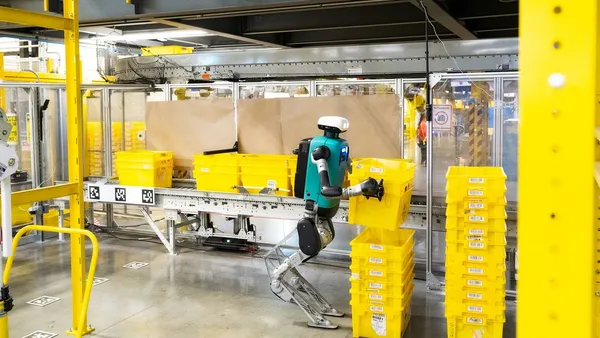
Prominent legacy use cases included Autonomous Mobile Robotics (AMRs) for inventory movement in automated warehousing, articulating arms to enable assembly lines in automotive and electronics factories, and sensors for predictive maintenance systems in heavy industry to predict machine part replacements. While these applications delivered value, they operated within narrow parameters and with limited flexibility, even in industrial conditions that are considered to be well-constrained. ultimately, this reduced the ability of any given player to fully capture the market opportunity.
Three critical barriers defined this era:
- Prohibitive capital costs made initial investments in robotic hardware, control systems, and implementation services often insurmountable—particularly for mid-sized organizations. The economics simply didn't work for many potential adopters who faced six or seven-figure upfront investments with uncertain returns.
- Integration complexity created significant friction, which was one of the key drivers behind our investment in SVT Robotics (Fund I). Companies struggled to integrate new automation systems with existing legacy infrastructure: Enterprise Resource Planning (ERP) systems, Warehouse Management Systems (WMS), and Manufacturing Execution Systems (MES). This "integration friction" often extended deployment timelines and multiplied costs beyond initial projections.
- The lack of advanced manipulation and dexterity in robotics has limited automation in industrial environments by restricting robots to repetitive, structured tasks, unable to handle complex or variable objects. This slows adoption in situations like complex assembly (think about wiring an electronic device) and value added services in logistics (consider inspecting returned goods) where human-like precision and adaptability are imperative.
Compounding these challenges is the lack of a coherent data infrastructure— the foundational systems, tools, and technologies that enable the collection, storage, processing, and analysis of data in an organization. The reality is that across industry, the investment in data infrastructure is varied, with many organizations still trying to understand the limits of their capabilities. In fact, we just worked with a portfolio company striving to navigate this with one of the largest global supply chain service providers. Not to mention, the need for the skilled personnel required to build, implement, and maintain complex AI systems feels out of reach for most incumbents.
Physical AI in a Post Gen-AI World
Generative AI has the potential to accelerate the time to value in the realm of Physical AI and in other instances, fundamentally transforming our approach to automation. This represents a paradigm shift from deterministic automation to improvisational intelligence.
The transformation manifests through several Generative AI technical breakthroughs:
- Large Language Models enable natural language robot programming, allowing factory workers to instruct machines using conversational language rather than complex proprietary programming interfaces
- Vision Foundation Models provide enhanced understanding of the physical environment, enabling robots to interpret and respond to complex visual environments in real-time
- Physics-informed Models are essential in accounting for the principles and realities of physics that we are bound to. This has historically been difficult, creating dangerous differences between simulation environments and production
- Multimodal Models combine visual and textual reasoning, creating more sophisticated decision-making capabilities
- Diffusion Models originally developed for text-to-image generation, are being applied to complex robotics problems. For tasks like grasping objects, diffusion models can generate multiple valid and successful trajectories rather than relying on single pre-programmed path, thereby making robots more robust and versatile in the real-world
Combine the above breakthroughs and one can build agentic workflows for this sector where one can receive maintenance alerts, autonomously consult technical manuals, query operational histories, diagnose root causes, and generate detailed work orders with step-by-step instructions—all with minimal human intervention.
A Note on Training Data
Historically, synthetic data generation has addressed the "cold start" problem that plagued traditional AI training. But the challenge was creating synthetic data that was representative of the physical world, namely accounting for the principles of physics. Today, Generative AI can take this into account by creating vast, high-fidelity synthetic datasets and realistic simulations of countless operational scenarios. This allows AI models to be trained on amuch wider range of conditions than what could be collected from real-world operations.
But Will Hardware Be the Bottleneck
One of the core assumptions that underpin the potential of Generative AI on Physical AI is the ability of hardware developments to keep pace with software development, as the two must evolve in tandem to achieve optimal performance. Further, improved hardware must also come at a price point that is well below conventional alternatives in the market today (a statement of being 10x better and 10x less expensive).
Limited dexterity in robotic hardware restricts Generative AI’s potential in tasks requiring fine motor skills, such as assembly or handling fragile items. If hardware innovation remains anemic, the full extent of benefit that AI can bring to the industrial economy will not be realized
Similarly, Generative AI models can be iterated quickly via software updates, but hardware development (ex: new actuators, grippers/end effectors, batteries, or materials) is slower due to design, testing, and manufacturing constraints. This mismatch can lead to Generative AI being underutilized as robots remain stuck with outdated physical capabilities.
Advances in AI-driven hardware design/optimization, simulation, and additive manufacturing allow for faster hardware iteration that could align physical capabilities with GenAI’s potential.
For example, breakthroughs in lightweight actuators or precision grippers could allow robotics to keep pace with the benefits of Generative AI unlocking applications in flexible manufacturing, autonomous warehousing/fulfillment, and beyond. Without this, Generative AI’s transformative potential in Physical AI will remain constrained by the physical limitations of robotic hardware, while together, these technological advancements could work harmoniously to bring forth a new era of automation.
How Big Could it Get?
The market transformation has been nothing short of extraordinary. What began as a traditional robotics and automation market valued at $196.4B in 2021 has evolved into a GenAI-augmented ecosystem projected to exceed $400B by 2030. The pre-GenAI Physical AI market, representing a substantial ecosystem growing at a respectable 9-10% CAGR, stands to benefit from the application of Generative AI in our physical world.
GenAI-infused segments are now projected to grow at CAGRs of 15-45%, representing a significant market acceleration and compelling investment opportunity. In 2024, the AI in supply chain market reached approximately $2.3B and is poised to grow at nearly 39% CAGR over the coming decade. Similarly, the AI in the manufacturing segment achieved comparable scale at roughly $5.3B in 2024, with projections to reach $47.9B by 2030—a remarkable 46.5% CAGR.
This acceleration reflects the potential for GenAI's role as a force multiplier for Physical AI. By making intelligent automation more capable, inexpensive, and easier to deploy, generative AI is fueling faster adoption curves and significantly larger investment inflows than the pre-GenAI era. The market is experiencing what economists might recognize as a classic technology adoption acceleration, where a breakthrough innovation doesn't just improve existing processes, but fundamentally expands the underlying addressable market.
This transformation is particularly pronounced in sectors that previously struggled with automation adoption. Though small and medium-sized enterprises, for example, historically priced out of sophisticated automation solutions, these are now within reach due to GenAI’s impact of less upfront investment and specialized expertise.
Challenges & Risks
The integration of GenAI into Physical AI systems introduces significant challenges that extend far beyond technical implementation. Safety considerations top the list, as allowing AI greater autonomy over physical equipment fundamentally raises the stakes. When AI systems control machinery that can cause physical harm, the margin for error shrinks dramatically, requiring robust failsafe mechanisms and extensive testing protocols.
Regulatory and ethical constraints also create substantial compliance overhead, particularly in highly regulated industries. Pharmaceuticals, food processing, and aviation sectors must maintain strict regulatory frameworks that were never designed with AI autonomy in mind. Deploying GenAI to manage production lines or logistics in these contexts requires navigating complex compliance landscapes. Applying guardrails in these environments will be a strict requirement.
Explainability represents a critical challenge for high-stakes applications in regulated industries. The ability to explain why an AI model made a particular decision is crucial for building trust, ensuring safety, and proving compliance. "Black box" AI systems face significant barriers to adoption in contexts where accountability and transparency are paramount.
Leveraging synthetic data also brings its own headaches known as the "reality gap" - the difference between simulated environments where AI systems train and the messy complexity of real-world operations. While synthetic data generation offers massive advantages, ensuring models trained on synthetic data perform reliably in the real world remains an ongoing challenge. This is what has resulted in the rise of Physics-informed models that we discussed previously.
As with LLMs, data governance and security concerns around proprietary data add another layer of complexity, as companies must balance the benefits of data sharing to improve the core model, versus training their own proprietary model. Furthermore, privacy and surveillance concerns also arise from sensor-rich Physical AI systems, particularly those with cameras and microphones that monitor workers. Companies must navigate strict data privacy regulations like GDPR in Europe while maintaining transparent policies regarding data collection and use.
Finally, integration with legacy equipment continues to pose significant obstacles and a reality of selling into players that make and move goods. They will be loath to rip/replace existing equipment, systems, and processes. As one former GE executive reminded us many years ago, “A failed technology implementation or improvement at one of our facilities can have GDP-level implications.” Many industrial facilities operate machinery that are decades old, creating compatibility challenges that require sophisticated bridging solutions. The cost and complexity of retrofitting existing systems can quickly erode the economic benefits of AI implementation.
Key Considerations for Gen-AI
The longer-term outlook for GenAI in Physical AI points toward a fundamental transformation comparable to the introduction of electricity or personal computers in manufacturing. We're approaching an era of "smart" factories and warehouses where AI orchestrates processes end-to-end. Experts predict that AI could drive material improvements in manufacturing output over the next decade.
A key requirement to drive labor substitution will be advanced manipulation and improved dexterity in robotics in industrial environments to allow for the handling of complex or variable objects where human-like precision and adaptability are needed. Note, we are bottlenecked by affordable and production-grade end effector and gripper designs rather than software.
Other successful implementations will come from collaboration between humans and AI rather than the wholesale replacement of labor. The emerging model in the realm of software treats AI as a co-worker and decision-support system. We see this continuing in the physical world if you consider augmented reality interfaces that provide workers with real-time guidance and insights. This human-AI partnership model addresses both productivity goals and workforce concerns about displacement.
Economic incentives are aligning powerfully behind AI adoption. Demonstrated ROI from AI-powered automation systems is making the business case increasingly compelling, while workforce demographics in developed countries—particularly aging populations—are driving automation demand as a necessity rather than luxury or profit maximization exercise.
The AI regulatory landscape will need to evolve to accommodate AI capabilities while ensuring safety and accountability. Forward-thinking companies are already engaging with regulators to shape frameworks that enable innovation while maintaining appropriate safeguards — though we do expect a divide between the US and Europe in how regulation is handled.
Finally, geopolitical protectionism and the need for greater supply chain resilience will create additional momentum for manufacturing to be near-shored and reshored. In parallel, labor shortages (and more expensive costs) will definitely drive greater demand for domestic Physical AI capabilities in an attempt to ensure cost competitiveness.
Potential Investment Opportunities
The convergence of GenAI and Physical AI not only renews interest in existing areas that are now feasible to solve at scale, but also creates entirely new categories of investment opportunities.
Robots-as-a-service business models powered by AI represent one of the most compelling mid-market opportunities. This model offers flexible automation akin to SaaS that allows this segment of the market to benefit from robotics without the need for financing or large capex commitments. This approach directly addresses labor shortages and warehouse efficiency challenges, while GenAI provides the competitive differentiator in robot intelligence.
Advanced low-cost robotic manipulation presents a prime investment opportunity, delivering affordable automation through innovative end effectors and grippers that enhance efficiency in manufacturing and logistics. AI-driven designs and cost-effective materials provide a competitive edge, addressing labor shortages and enabling scalable, high-return solutions for diverse industries.
Industrial "metaverse" applications using digital twins and GenAI for simulation, design, and optimization represent another frontier. Pairing digital twins with GenAI allows manufacturers to organize disparate data streams—maintenance logs, sensor readings, quality metrics—and derive actionable insights dramatically faster than traditional approaches.
Predictive maintenance is being fundamentally reinvented through generative AI - similar to our recent investment in Ceto (Fund III). Rather than simply predicting when a machine will fail, GenAI analyzes multimodal data—images, audio signals, equipment logs—to determine why it will fail and prescribe specific remediation steps. This creates opportunities for a "technician copilot" solutions that augment human expertise with AI insights.
Generative design for manufacturing represents a transformative opportunity where AI generates hundreds or thousands of optimized designs based on performance requirements like energy consumption, durability, weight, sourcing constraints, and manufacturing methods to optimize/redesign existing products. This capability is revolutionizing product development cycles and creating new possibilities for mass customization.
Enabling technologies present substantial opportunities for companies focused on synthetic data generation, edge computing, and specialized AI hardware. The focus should be on AI-native startups building solutions from the ground up to harness GenAI's full potential, rather than traditional companies attempting to retrofit existing solutions.