Data Center Industrialization Primer
AI infrastructure is the next industrial competency
Written by Santosh Sankar, Jon Bradford, and Madelyn O'Farrell, 2026-07-17
Summary
The AI buildout did not create a new kind of infrastructure problem. It exposed one that was already there. Data centers were treated as a real estate business for two decades, but when GPU-era demand arrived, it arrived at a scale and complexity that every layer of that legacy model was unprepared for. The power grid cannot interconnect campuses fast enough. The construction industry does not have the workers to build them. The electrical supply chain cannot deliver the components on time. The software to run them efficiently does not exist outside the hyperscalers. The asset disposition industry was not built for hardware that refreshes every few years. None of these are technology problems, but rather they are the accumulated consequence of an industry that scaled its ambition without scaling its operational infrastructure. The gap between the two is where we are investing.

The world is consuming intelligence the way it consumes electricity, and the infrastructure required to sustain that consumption is a real-world opportunity.
The defining technology of the incoming decade, AI, is being built out the same way other critical infrastructure such as rail, telecommunications and energy was developed historically: with capital plans in the hundreds of billions, multi-year lead times with critical components, and energy constraints. These factories of the future similarly have real world bottlenecks.
Compute intelligence is becoming a key industrial resource, and all the functions associated with it - siting, building, powering, cooling, ongoing operations and decommissioning - align with every other industrial lifecycle we have previously studied.
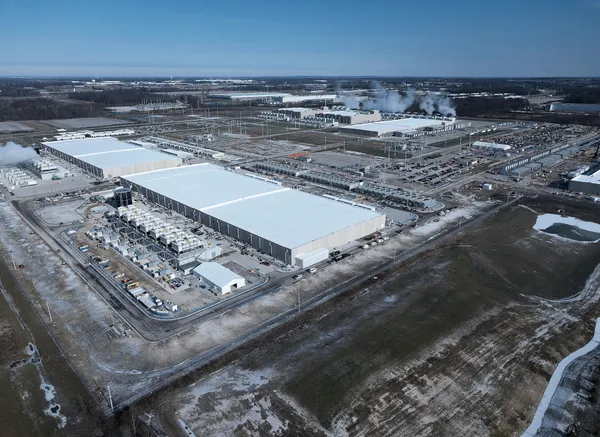
AI has transformed data centers from sleepy, behind the scenes cost centers to industrial complexes that are the key enablers of the AI movement. What would have been considered a large, standalone data center a decade ago is today simply one building within a wider campus that may contain dozens like it. These campuses have drastically different physics: a 100 MW AI campus draws roughly 25 times the power of a conventional enterprise data center, requires liquid cooling infrastructure that did not exist at commercial scale five years ago, and demands electrical systems closer in complexity to a regional substation than a commercial building. The prior infrastructure, design, procurement, and construction playbooks were not designed for this.
As a result, the sector is experiencing what engineers and analysts are calling an infrastructure investment supercycle. Global data center infrastructure spending is projected to approach $7T over the next five years, with roughly 100 GW of new capacity expected to come online between 2026 and 2030. Compare this to the prior era, where global data center capacity increased from 27 GW in 2009 to around 38 GW by the end of 2017 (Visual Capitalist).
The capital commitments reflect the urgency but also the promise of AI embedding itself across the global economy. In Q1 2025, data center construction represented fully 1% of US GDP; a figure that would have seemed implausible five years ago (Apollo). Alphabet, Amazon, Microsoft, and Meta plan to invest over $350B in data centers in 2025, rising to roughly $400B in 2026. In total, data center capex is expected to add up to $3.3T through 2029 (BloombergNEF). For comparison, annual data center equipment and system spending tracked in the low billions in the early-to-mid 2010s (Visual Capitalist).

The Data Center Value Chain
Building and running a modern AI data center is a sequence of interdependent industrial systems, each with its own supply chain, workforce, regulatory environment, and bottleneck profile. A failure at any layer has knock-on effects downstream.
What follows is a map of that sequence, layer by layer. For each, we identify the key activities and then the bottlenecks constraining it today.
Stage 1 — Siting & Power
Everything starts with land and power, and increasingly, in that order. For most of the industry's history, site selection was a real estate discipline run by people from commercial property. The GPU era made energy the primary constraint, converting site planning from a zoning and lease negotiation into something closer to utility development. Power is no longer something an operator buys from a utility and forgets. A modern campus requires a portfolio of energy sources managed against a hard timeline: an application to the grid filed with full knowledge of a multi-year queue, behind-the-meter generation for near-term certainty, and longer-dated agreements with geothermal or nuclear providers for the delivery window beyond that. The grid connection and the building come online at different times, and the energy strategy has to bridge that gap.
BOTTLENECKS
🚨Interconnection queues have become the primary gating item
As of early 2026, US interconnection queues contain 2,600 GW of proposed generation and storage, more than double the country's entire existing operational capacity, with average wait times of five to seven years (Enki). In ERCOT (the Texas market in utility-speak), data centers comprise 87% of a 410 GW large load queue. The mismatch is structural: data centers must be built and operational within 18–36 months, and the grid cannot accommodate them on that timeline in most markets.
🚨Community and regulatory opposition has become a material development risk
More than $64B in data center projects were delayed or canceled between May 2024 and March 2025 due to organized community opposition given cost and resource impacts (Data Center Watch). In Texas, Senate Bill 6 shifted grid upgrade costs directly to large data center users and mandated early-stage transparency requirements.
🚨Water constraints are emerging as a siting barrier
As of May 2026, 517 of 809 planned US data centers sit in areas that experienced drought over the past year (ConstructConnect). Modern liquid cooling reduces water intensity per unit of compute, but hundreds of gigawatts of new capacity concentrated in already water-stressed geographies means aggregate consumption increases exacerbate the issue further. Water availability and community water politics are now active inputs to site selection that simply did not exist in the CPU data center era.
🚨Behind-the-meter (“BTM”) generation has its own supply chain crunch
Gas turbine demand has nearly doubled Mitsubishi Power's ten-year market forecast in a single year. Fuel cell manufacturers face equivalent pressure: Bloom Energy is targeting 2 GW of annual production capacity by the end of 2026. Operators who did not lock in equipment commitments early are discovering that BTM generation has its own multi-year procurement horizon.
🚨Alternatives not ready at the required scale and speed
Geothermal is reaching commercial scale for the first time in 2026 (see Fervo’s first 500 MW project in Utah, and recent IPO). Nuclear PPAs are being signed across every major hyperscaler, but the first electrons from a dedicated AI data center nuclear deal arrive in 2027, and small modular reactors (“SMRs”) are a decade from meaningful deployment. Fuel cells are also faster to deploy than turbines, but limited in scale today. Dynamo portfolio company Celadyne's thesis is that the scale limitation of fuel cells is fundamentally a materials problem, and their membranes (higher performance, manufacturable at volume) are the unlock.
Stage 2 — Build
Data center construction has become an industrial program-management problem. Execution has shifted from sequential on-site builds to modular, prefabricated delivery - electrical rooms, cooling blocks, and data-hall pods assembled in factories and shipped to site - and the most successful construction companies operate less like general contractors and more like aerospace primes assembling the key components that are manufactured off-site. This is a demonstration of a trend we’ve mentioned before dubbed “construct-uring” or the movement of construction to adopt principles and practices common in manufacturing environments. The binding constraint is people: a workforce that builds and energizes the facility (electricians, pipefitters, HVAC and controls specialists, commissioning engineers) and one that runs it once live, with the GPU era outrunning the training pipeline for both.
BOTTLENECKS
🚨Construction workforce shortage actively delaying projects
The US construction industry is short by an estimated 439,000 skilled workers (ConstructionDive). Mechanical, electrical, and plumbing (“MEP”) trades - electricians, HVAC technicians, controls specialists - take months to source and cannot be substituted. More than half of active data center construction sites report delays attributable to workforce constraints. Dynamo portfolio company RecordLens addresses these constraints, specifically the administrative and compliance burden for executing these projects, through an AI-powered field operations and project management platform for specialty trade contractors.
🚨Procurement fragmentation has no coordination infrastructure
Owner-operators manage contracts with twenty to thirty separate vendors per build with no single source of truth across the full bill of materials. Transformer delivery date, switchgear fabrication progress, chiller lead time are all tracked in spreadsheets and siloed systems. A delay in any one component propagates through the schedule in ways that are non-obvious until they lead to expensive overruns. RecordLens’ platform can also help with this coordination to ensure all parties are performing work to spec, material delays are properly accounted for, and change orders/expansion of scope are reflected both operationally and financially.
Stage 3 — Fit-out
With the shell built and powered, the fit-out is where the capital expenditure is most concentrated: the chips and the cooling systems that keeps them operational through peak usage. Compute hardware is the central financial act in the whole build - and also the most concentrated supply chain - which is why transactions like the recent Apollo/Blackstone/Broadcom $35B financing treat GPU commitments as infrastructure projects rather than technology purchases.
The heat generated by new GPUs breaks the conventional cooling model that relied on air for CPU racks at 5–20 kW. GPU racks at 40–300+ kW force a shift to more expensive and complex liquid cooling. Today, this is primarily direct-to-chip cold plates (~65% of the 2026 market), in which liquid is delivered directly to the chip itself via copper plates. Immersion, which submerges the entire server in a non-conductive fluid, is confined to the highest-density hyperscale and High-Performance Computer (HPC) environments because it requires purpose-built hardware and substantially more complex operations.
BOTTLENECKS
🚨Transformer and switchgear lead times are the largest procurement constraint
Transformer lead times have extended to four to five years, up from 12 to 18 months in the pre-AI era, while switchgear lead times run up to 60+ weeks (Reuters). These are custom-engineered components built by a small number of global suppliers whose order books are now stretched years out. A single delayed transformer can hold a fully financed, fully constructed campus offline for months.
🚨Supply concentration in AI accelerators creates systemic procurement risk
NVIDIA controls approximately 80% of the AI accelerator market, the market for chips purpose-built to run AI workloads (training and inference) in data centers. Custom Application-Specific Integrated Circuits (ASICs) from Google, Amazon, and Microsoft are increasingly capable but largely captive to their respective cloud ecosystems, with significant software migration costs that make them unavailable to the broader market.
🚨Hardware refresh cycles are compressing faster than operators can plan for
GPU generations turn every two to three years. A data center designed around H100-class hardware may need to accommodate B200-class hardware before the building is fully depreciated, requiring power and cooling infrastructure upgrades that were not in the original capital plan.
🚨High-Bandwidth Memory (HBM) is a supply constraint
HBM is co-packaged with the GPU die and produced in volume by only three manufacturers globally. Supply constraints in HBM track GPU supply constraints closely. A disruption in that supply chain propagates directly to GPU availability.
🚨Most of the existing data centers are thermally incompatible with AI workloads
Standard data centers facilities were designed for 5–20 kW per rack. The gap to 100–300 kW AI configurations requires structural reinforcement, new piping infrastructure, upgraded electrical distribution, and in many cases replacement of the entire cooling plant. This is work that is uneconomical in most existing facilities, and therefore a large fraction of the global data center fleet is functionally obsolete for AI training (the training of large language models).
🚨Liquid cooling supply chains are stretched and immature at scale
Liquid cooling infrastructure faces a compounding problem: the equipment takes a long time to arrive (chiller and coolant distribution unit lead times run 12 to 16 months), and when it does commissioning engineers are ill prepared as liquid cooling has never been managed at this scale.
Stage 4 — Connect & Operate
Getting the hardware into a building is only half the job. The other half is making it productive. A GPU cluster at scale requires a purpose-built internal network — the connective tissue that lets thousands of chips communicate with each other fast enough to run a single coordinated workload. That network is fundamentally different from anything a conventional data center requires, because AI training demands that every chip is interconnected at extremely low latency rather than simply routing requests between users and servers. Layer on top of that the software systems that manage power, cooling, capacity, and workload scheduling in real time, and what looks like an infrastructure problem becomes an operations problem. A facility full of expensive hardware that runs at 30–50% utilization looks more like a poorly operated eCommerce warehouse.
BOTTLENECKS
🚨 The components that connect a GPU cluster are difficult to procure
Networking a 100,000 GPU cluster requires hundreds of thousands of optical transceivers - small components that convert electrical signals to light for transmission between chips and switches. They are unglamorous, easy to overlook in procurement planning, and currently subject to lead times that have stretched well beyond what operators expected. For the largest transceivers, which are required by AI workloads, lead times have stretched 40+ weeks (Utmel). Several large builds have found themselves with GPUs on-site and no way to connect them because transceiver supply was not locked in alongside GPU compute supply.
🚨 The engineering required to design and run these networks does not exist at scale outside the hyperscalers
The internal network architecture of an AI training cluster is a specialized discipline that most data center operators have never needed before. The hyperscalers have teams dedicated to it. The rest of the market is building that expertise from scratch, at the same time as they are trying to bring facilities online. The gap between what a cluster needs and what the available talent pool can deliver is a real and underappreciated constraint.
🚨 The underlying networking technology standard is still being settled
For most of the last decade, AI clusters used a proprietary networking protocol called InfiniBand because it offered the lowest possible latency. High-speed Ethernet has now caught up on performance, and is expected to become the dominant standard by 2029. Operators who must make long-duration infrastructure commitments today are doing so before that transition has resolved, which is a meaningful planning risk when a wrong choice is expensive to unwind.
🚨 The software that runs a data center was not built for AI workloads
The platforms that most operators use to monitor and manage their facilities were designed for a different era: static workloads, air-cooled hardware, and power consumption that was predictable enough to plan around. They cannot tell an operator in real time the load of each GPU, how much thermal headroom exists before cooling becomes a problem, or which chips are quietly degrading under sustained load. The result is that most facilities outside the hyperscalers leave enormous amounts of expensive GPU compute sitting idle without knowing it.
🚨 Data centers must respond to the grid but lack the software to do it
A December 2025 federal directive reclassified large data centers as grid-level assets, meaning they now carry mandatory obligations to curtail power consumption during grid stress. Meeting that requirement - and capturing the financial upside that comes with active grid participation - requires software that can shift workloads in real time in response to electricity price signals. Outside the hyperscalers, that software does not yet exist at commercial scale.
Stage 5 — Retire
Every piece of hardware in a data center has a useful life, and what happens at the end of it is more operationally involved than most operators anticipate. Decommissioning requires asset inventory, data sanitization to regulatory standards, chain-of-custody documentation, and secondary market remarketing or recycling. Each step comes with its own compliance obligations and commercial considerations. What looks like a disposal problem is in practice a logistics, compliance, and asset management problem running simultaneously.
BOTTLENECKS
🚨 No platform has unified the AI-era decommissioning workflow
The IT asset & disposition businesses that exist today were built in a paradigm when bulk enterprise hardware on long depreciation schedules, compliance requirements were modest, and secondary market pricing was stable enough to negotiate. What the AI era has produced is the opposite, and no platform manages everything together for AI hardware specifically at a time when the volume arriving at end-of-life is growing fast.
🚨 Secondary market pricing is volatile and poorly instrumented
The GPU secondary market moves faster than any pricing infrastructure currently tracks it. A disposition decision made on stale data can cost an operator millions in recoverable asset value. We have seen this dynamic before as it is what created the software opportunity in freight spot markets.
Investment Opportunities
The last significant industrial cycle was built by the likes of Carnegie, Vanderbilt, Westinghouse, Rockefeller, and Ford who were unafraid to establish critical industrial competencies that we still rely on today such as steel milling, shipping, energy generation and distribution, and manufacturing. We believe this cycle will be built by those who can navigate the nuances of vertical integration vs outsourcing and stitching technology into the new industrial order that combines software, coordination infrastructure, and workforce platforms. The following is a non-exhaustive list of examples of where we see opportunities for each of the different stages of the data center value chain outlined above.
The neo-utility for data centers. No data center developer today has a single counterparty they can call to outsource their full energy and cooling requirements to. The companies willing to own that end-to-end could occupy a high-growth, mission critical, and therefore defensible position. The ability to deploy and manage electricity from the grid, behind-the-meter generation assets, cooling systems, and related regulatory obligations as a single coordinated system is of interest to us.
Workforce platforms for the trades. The data center buildout has exposed the trades shortage in its most acute form. At the core, we believe the opportunity is a vertically integrated platform that owns the pipeline from sourcing to placement for mechanical, electrical, and plumbing (MEP) trades, rebuilding the employer-to-institution relationship that was severed forty years ago and accumulating the outcomes data that makes each subsequent placement more accurate.
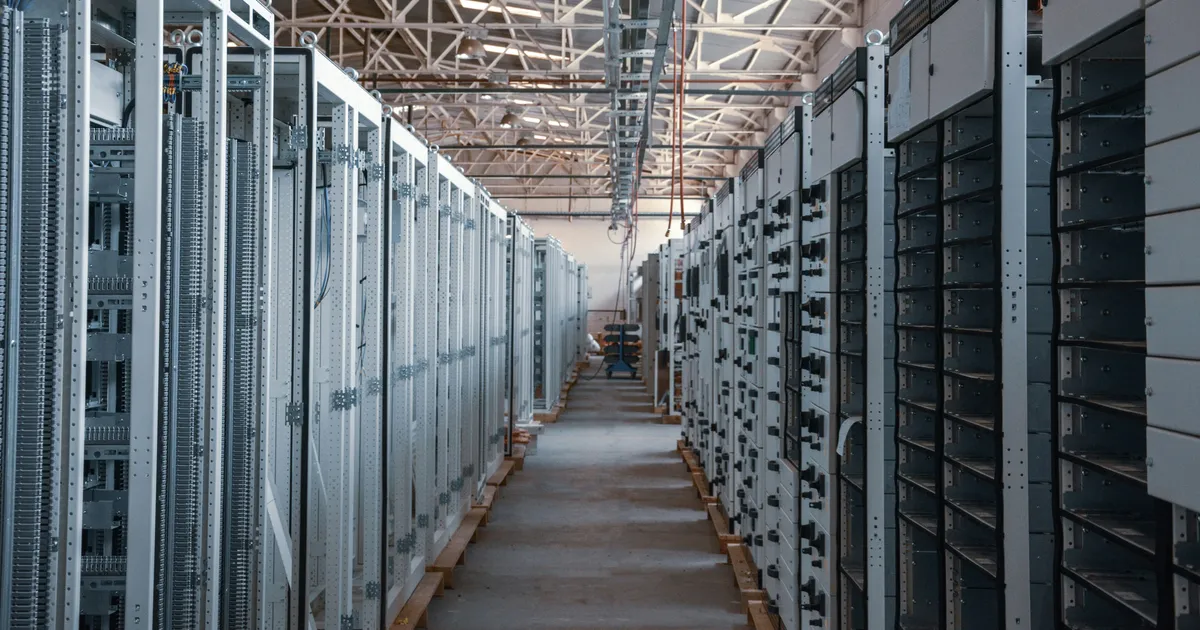
A Foxconn for electrical equipment. Unlike the movement we’ve seen in consumer electronics over the last 25 years, critical equipment for electrical distribution has not commoditized despite there being limited innovation and differentiation amongst brand name offerings. On the back of multi-year backlogs and shortages for transformers, circuit breakers, and switchgears, we think the time is opportune for a contract manufacturer that can mass-produce competitive products in an effort to retain sovereignty of core grid supply chains and support the build out of both compute infrastructure and reshoring capacity.
Predictive maintenance for GPU infrastructure. GPU clusters degrade faster and less predictably than anything the data center industry has previously managed, and a single chip failure can halt a training run worth hundreds of thousands of dollars. The problem is a direct analog to industrial predictive maintenance software we have tracked in manufacturing.
Asset lifecycle management. As the installed base of AI hardware matures, the decommissioning workflow - inventory, sanitization, chain-of-custody documentation, and secondary market remarketing - requires capability that the legacy IT asset disposition industry was not built to provide. We believe there is an opportunity to build the end to end reverse logistics platform for GPU compute hardware.
Where we go from here
The challenges posed by the data centers are not new for Dynamo; they are the physical economy’s newest industrial buildout, and they reward the same thing every prior wave has rewarded: understanding the system deeply enough to find the constraint before the market prices it. We are actively meeting founders across every layer of this value chain. If you are building at one of these bottlenecks, or know someone who is, we want to talk. Capital is abundant; understanding is scarce; and this is exactly the kind of complexity Dynamo was built to underwrite.